

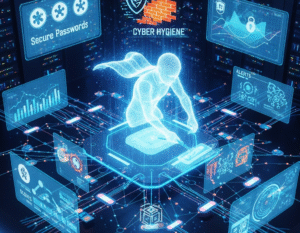
 In an increasingly interconnected world, where every individual and organization leaves a vast digital footprint, the concept of effective cyber hygiene has evolved from a niche IT concern into a fundamental pillar of operational resilience. Just as personal hygiene prevents disease, digital hygiene safeguards your invaluable assets from the ever-present dangers lurking in the cyber realm. As threats grow more sophisticated, often powered by advanced artificial intelligence and machine learning, a proactive, systematic approach to securing your digital presence is not merely advisable, it is absolutely essential for survival and prosperity.
Why Cyber Hygiene Matters More Than Ever
The landscape of cyber threats is a relentless tide, constantly shifting and rising. We are no longer grappling solely with opportunistic hackers; instead, we face highly organized, well-funded cybercriminal syndicates, nation-state actors, and insiders. These adversaries employ advanced persistent threats, supply chain attacks, and increasingly personalized social engineering tactics. Data from various industry reports consistently shows that a significant percentage of successful breaches stem from easily preventable vulnerabilities, such as unpatched software, weak credentials, or a lack of employee awareness. Each successful breach carries a profound cost, not just financially, but also in terms of reputational damage, regulatory fines, and operational disruption. The proliferation of IoT devices, the expansion of cloud computing, and the ubiquitous nature of remote work have vastly expanded the attack surface, making robust cyber hygiene more critical than it has ever been.
Core Pillars of Robust Cyber Hygiene
Effective cyber hygiene is a multi-layered defense strategy, built upon foundational practices that collectively fortify an organization’s digital defenses. Neglecting any one of these pillars can create a critical vulnerability that attackers are all too eager to exploit.
Identity and Access Management: Your Digital Keys
The first line of defense often lies with who has access to what, and how that access is secured. Weak or compromised credentials remain a primary entry point for cyber attackers. Implementing strong, unique passwords for every account, coupled with mandatory multi-factor authentication, particularly for privileged accounts, dramatically reduces this risk. The principle of Least Privilege, or PoLP, dictates that users should only be granted the minimum necessary access required to perform their job functions. Regular access reviews are also vital, ensuring that permissions are revoked when employees change roles or leave the organization. Identity management solutions centralize control, providing a clearer overview and reducing the administrative burden of maintaining secure access.
Patch Management: Keeping Your Defenses Up-to-Date
Software vulnerabilities are a constant reality, and diligent patch management is perhaps the most fundamental aspect of preventing widespread attacks. Major incidents, from ransomware outbreaks to significant data breaches, are frequently traced back to unpatched systems. Operating systems, applications, network devices, and firmware all require timely updates. Automated vulnerability scanning tools can identify outdated software and missing patches across your environment, allowing for rapid remediation. Establishing a clear, consistent patch management policy, complete with testing procedures, is crucial for maintaining a strong security posture. Neglecting this simple step is akin to leaving your front door unlocked in a bustling city.
Network Segmentation and Monitoring: Building Fortresses
Flat networks are an open invitation for attackers to move laterally once they gain initial access. Network segmentation involves dividing a network into smaller, isolated segments, limiting the blast radius of a potential breach. For instance, separating critical servers from general user workstations can prevent a compromised endpoint from immediately affecting core business functions. Beyond segmentation, continuous network monitoring is paramount. Advanced threat detection systems can analyze network traffic for anomalous behavior, identify suspicious connections, and alert security teams to potential intrusions in real-time. This proactive monitoring allows for swift incident response, minimizing potential damage.
Data Protection: The Crown Jewels
Data is the lifeblood of modern organizations, making its protection paramount. A comprehensive data protection strategy involves several components. First, classify your data to understand its sensitivity and value. Second, implement robust encryption for data both at rest (on servers, databases, and endpoints) and in transit (during transmission across networks). Third, establish regular backup routines and maintain a tested data recovery plan to ensure business continuity in the event of a breach or disaster. Finally, Data Loss Prevention, or DLP, solutions can prevent sensitive information from leaving the organization’s control, whether through accidental leaks or malicious exfiltration.
Employee Training and Awareness: The Human Firewall
No matter how sophisticated your technological defenses, your employees remain your strongest, and potentially weakest, link. Human error and susceptibility to social engineering attacks are consistently identified as leading causes of breaches. Comprehensive security awareness training should be ongoing, not a one-off event. This training should cover topics such as recognizing phishing attempts, understanding the risks of suspicious links and attachments, reporting potential security incidents, and the importance of strong password practices. Fostering a security-first culture ensures that every employee understands their role in safeguarding the organization’s digital assets. This collective vigilance transforms the workforce into a formidable ‘human firewall’.
Essential Cyber Hygiene Practices for a Secure Digital Environment
| Practice | Description | Key Benefit |
| Multi-Factor Authentication (MFA) | Requires users to provide two or more verification factors to gain access to an account. | Significantly reduces risk of unauthorized access even if passwords are stolen. |
| Timely Patching | Regularly updating operating systems, applications, and firmware to address known vulnerabilities. | Closes common security loopholes, preventing exploitation by attackers. |
| Network Segmentation | Dividing a network into smaller, isolated sub-networks to limit lateral movement. | Contains breaches, preventing them from spreading across the entire infrastructure. |
| Employee Security Training | Ongoing education for staff on identifying and avoiding common cyber threats like phishing. | Empowers employees to be the first line of defense, reducing human error. |
| Dark Web Monitoring | Scanning underground forums and marketplaces for compromised organizational credentials. | Enables proactive credential revocation before breaches occur. |
| Data Encryption | Transforming data into an unreadable format to protect it from unauthorized access. | Safeguards sensitive information, rendering it useless if exfiltrated. |
Implementing Advanced Cyber Hygiene Practices
While the core pillars form the foundation, truly advanced & effective cyber hygiene goes beyond basic maintenance. It embraces a proactive, intelligence-driven approach, leveraging cutting-edge technologies to stay ahead of sophisticated adversaries.
Leveraging Automation and AI
The sheer volume of security data and the speed of modern attacks make manual defense impractical. Automation and artificial intelligence are critical for scaling effective cyber hygiene efforts. AI-powered tools can analyze vast datasets for subtle indicators of compromise, automate routine security tasks like patch deployment and vulnerability scanning, and provide real-time threat intelligence. This not only increases efficiency but also enhances precision in detecting and responding to threats, allowing human analysts to focus on complex investigations and strategic planning.
Dark Web Intelligence and Proactive Defense
A significant portion of cyberattacks originate from information exchanged or sold on the dark web, including compromised credentials, intellectual property, and zero-day exploits. Proactive dark web monitoring involves scanning these clandestine marketplaces for mentions of your organization, its employees, or its assets. This intelligence allows organizations to take preemptive action, such as revoking compromised credentials before they are used in an attack, understanding emerging threat patterns, and identifying potential insider threats. It’s a crucial component of an early warning system, transforming reactive defense into proactive mitigation.
Continuous Attack Surface Management
Your attack surface is the sum of all points where an unauthorized user can try to enter or extract data from an environment. In today’s dynamic IT environments, this surface is constantly changing due to new cloud services, remote work devices, and third-party integrations. Continuous attack surface monitoring involves systematically discovering and inventorying all your digital assets, both known and unknown. This includes identifying shadow IT, unmanaged cloud instances, and external-facing vulnerabilities. By understanding your true attack surface, organizations can prioritize remediation efforts, eliminate blind spots, and ensure comprehensive security coverage. This approach moves beyond periodic scans to provide a real-time, holistic view of your organizational risk.
For organizations seeking a unified platform to manage these complex challenges, AMSEC, a leading cybersecurity company, offers a comprehensive solution. Born from the merger of RedRok and AMSYS, AMSEC combines continuous attack surface monitoring, internal vulnerability scanning, dark web intelligence, identity management, and real-time threat response into a single, cohesive platform. It’s designed to provide enterprises, MSPs, and MSSPs with the clarity, speed, and precision necessary to navigate a rapidly evolving threat landscape, simplifying and strengthening cyber defense across all fronts.
Frequently Asked Questions (FAQ)
What is cyber hygiene?
Cyber hygiene refers to the foundational practices and routines individuals and organizations follow to maintain the health and security of their digital assets. Much like personal hygiene prevents illness, digital hygiene protects against cyber threats. It encompasses a range of activities designed to minimize vulnerabilities and safeguard sensitive information in an increasingly interconnected digital world.
Why is cyber hygiene crucial for organizations today?
In today’s complex threat landscape, effective cyber hygiene is no longer optional but essential for organizational survival and prosperity. Organizations face relentless attacks from sophisticated adversaries, leading to significant financial losses, reputational damage, and operational disruptions. A proactive approach through effective cyber hygiene addresses common vulnerabilities, reduces the attack surface, and builds resilience against evolving cyber threats.
What are the core pillars of effective cyber hygiene?
Effective cyber hygiene is built upon several foundational pillars that collectively strengthen an organization’s digital defenses. These include robust Identity and Access Management to control who can access what, diligent Patch Management to keep systems updated, Network Segmentation and Monitoring to contain threats, comprehensive Data Protection strategies, and continuous Employee Training and Awareness to empower the human element. Neglecting any of these areas can create critical security gaps.
How can employees contribute to an organization’s cyber hygiene?
Employees are often considered the “human firewall” and play a critical role in an organization’s cyber hygiene. Through ongoing security awareness training, employees learn to recognize and report phishing attempts, understand the risks of suspicious links, and practice strong password habits. Fostering a security-first culture ensures that every individual understands their responsibility in protecting digital assets, significantly reducing the likelihood of human-induced breaches.
Beyond basic practices, what advanced cyber hygiene methods are available?
Advanced cyber hygiene involves leveraging cutting-edge technologies and intelligence-driven approaches to proactively defend against sophisticated threats. This includes integrating Automation and AI for rapid threat detection and response, utilizing Dark Web Intelligence for proactive threat mitigation, and implementing Continuous Attack Surface Management to identify and secure all digital assets. These methods move organizations beyond reactive defense to a more predictive and resilient security posture.
Is cyber hygiene a one-time effort or an ongoing process?
Cyber hygiene is unequivocally an ongoing, dynamic commitment rather than a static checklist. The digital threat landscape is constantly evolving, requiring continuous vigilance and adaptive strategies. Regular updates, ongoing training, continuous monitoring, and proactive adjustments to security practices are essential to maintain effective defense against new and emerging threats, ensuring enduring resilience in an unpredictable digital world.
Conclusion
Cyber hygiene is not a static checklist to be completed once and forgotten; it is a dynamic, ongoing commitment essential for navigating the complexities of the digital future. It requires continuous vigilance, adaptive strategies, and a willingness to embrace advanced technologies. By consistently implementing robust identity and access management, maintaining diligent patch management, segmenting and monitoring networks, protecting critical data, and empowering employees through continuous training, organizations can significantly fortify their defenses. The future of cyber security belongs to those who view hygiene not as a chore, but as an integral, evolving process for securing their digital footprint and ensuring enduring resilience in an unpredictable world. Proactive, unified defense is no longer an option, it is the imperative for sustained success.