

Imagine a silent, unseen adversary creeping through the digital corridors of your organization, not for a quick smash-and-grab, but to establish a long-term residency. This isn’t the stuff of science fiction; it’s the chilling reality of Advanced Persistent Threats, or APTs. For far too long, these sophisticated campaigns have haunted the sleep of security professionals, their stealth and tenacity making them notoriously difficult to detect with traditional defenses. But what if we had a sentinel that never slept, one capable of learning, adapting, and even predicting the moves of such a cunning foe? Enter Artificial Intelligence, poised to fundamentally transform our approach to this formidable challenge.
The Elusive Adversary: Understanding Advanced Persistent Threats
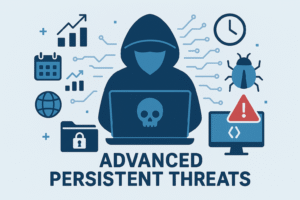
Advanced Persistent Threats are not your everyday malware attacks. They represent a more insidious, meticulously planned campaign, often orchestrated by nation-states or highly organized criminal syndicates. Their primary objective isn’t merely disruption; it’s prolonged access, data exfiltration, or espionage. Think of them as digital master burglars: they don’t smash a window; they carefully pick the lock, disable the alarm, and then move silently through your home, learning your routines before taking what they truly came for. This makes detecting their presence incredibly complex and emotionally taxing for security teams who feel the constant pressure of an unseen threat.
What truly defines an APT is its persistence and adaptability. These attackers are patient, willing to spend months or even years lurking in networks, escalating privileges, mapping infrastructure, and blending their activities with legitimate network traffic. They employ zero-day exploits, custom malware, and social engineering tactics, constantly evolving their methods to evade detection. The sheer volume of data, coupled with the subtle nature of APT activities, overwhelms even the most diligent human analysts.
Why Traditional Defenses Often Miss the Mark
Historically, cybersecurity has relied heavily on signature-based detection. This approach is like an old-school bouncer checking IDs against a list of known troublemakers. It works well for identifying previously seen malware or specific attack patterns. However, APTs don’t play by those rules. They continuously morph their tools and tactics, creating novel indicators that bypass static signatures. It’s a game of whack-a-mole where the moles are constantly changing their appearance and burrowing techniques.
Moreover, traditional security tools often operate in silos. A firewall sees network traffic, an endpoint protection solution monitors devices, and a SIEM collects logs. But APTs exploit the gaps between these disparate systems, moving laterally and using legitimate tools for nefarious purposes. Connecting these seemingly unrelated dots in real time, across vast and complex enterprise environments, is a monumental task for human teams. The fatigue and cognitive overload associated with sifting through millions of alerts, many of them false positives, lead to critical alerts being missed. This is where the emotional toll truly starts to mount for security professionals, who are fighting a battle on multiple fronts.
AI to the Rescue: A Paradigm Shift in Cyber Defense
This is precisely where Artificial Intelligence steps onto the battlefield, not as a replacement for human ingenuity, but as its powerful amplifier. AI offers a fundamental shift from reactive, signature-based defenses to proactive, intelligent threat hunting. It moves beyond “what we know” to “what looks wrong.”
Machine Learning for Unmasking Anomalies
At the heart of AI’s power in APT detection lies machine learning. Unlike static rules, ML algorithms can learn what “normal” looks like across an organization’s entire digital footprint. This includes network traffic patterns, user behavior, system calls, and file access patterns. Once a baseline of normalcy is established, any deviation, no matter how subtle, triggers an alert. Imagine a system that knows your employees’ usual login times, the typical data volumes they transfer, and the applications they commonly use. If a user suddenly logs in at 3 AM from an unusual location and starts accessing sensitive financial data, the AI flags it, even if no known malware signature is present. This behavioral anomaly detection is crucial for spotting the stealthy movements of an APT that leverages legitimate credentials.
Behavioral Analytics and Contextual Understanding
APTs often operate by chaining together a series of seemingly innocuous actions. A single failed login might not be alarming, but a string of failed logins followed by a successful login from a new device, then unusual file access, suddenly paints a concerning picture. AI excels at correlating these disparate events across the entire kill chain, providing a contextual understanding that human analysts would struggle to achieve in a timely manner. It can identify patterns that indicate lateral movement, privilege escalation, or data staging, which are hallmarks of an APT. This holistic view is paramount for effective detection.
Predictive Capabilities and Threat Intelligence
The most advanced AI systems go beyond merely detecting current threats; they can anticipate future ones. By analyzing vast repositories of global threat intelligence, including dark web chatter, vulnerability databases, and historical attack data, AI can develop predictive models. This allows for proactive defense measures, such as strengthening defenses around assets likely to be targeted or identifying potential attack vectors before they are exploited. This predictive power gives organizations a critical edge in a landscape where attackers are constantly innovating.
To better illustrate the distinction between traditional and AI-driven approaches, consider this comparison:
| Detection Method | Traditional (Signature-Based) | AI-Driven (Behavioral & Anomaly) |
| Primary Focus | Known threats, specific malware signatures | Deviations from normal behavior, novel attack patterns |
| Detection Speed | Slow, reactive to new threats | Near real-time, proactive |
| False Positives | High, due to static rules and noise | Lower, due to contextual learning |
| Adaptability | Low, requires manual updates | High, learns and evolves continuously |
| Threat Type | Commodity malware, known vulnerabilities | APTs, zero-days, insider threats, sophisticated campaigns |
The AMSEC Advantage: Unifying Defense Against APTs
At AMSEC, we understand that combating APTs requires more than just smart algorithms; it demands a unified, intelligent platform that provides clarity, speed, and precision. Our unique approach, born from the merger of RedRok and AMSYS, integrates continuous attack surface monitoring with internal vulnerability scanning, dark web intelligence, identity management, and real-time threat response. This comprehensive suite allows our AI to gain an unparalleled understanding of an organization’s risk posture and potential attack vectors.
For instance, our continuous attack surface monitoring identifies and prioritizes external vulnerabilities that APT actors often exploit for initial access. Simultaneously, our internal vulnerability scanning helps detect misconfigurations and unpatched systems within the network, which are prime targets for lateral movement. The integration of dark web intelligence allows our AI to correlate internal anomalies with external chatter about specific vulnerabilities or targeted organizations, providing crucial context that might otherwise be missed. This layered defense, powered by sophisticated AI, means that an APT trying to establish a foothold or move undetected within a network faces an incredibly robust and intelligent defense. Our platform doesn’t just alert; it provides actionable insights, helping security teams understand the full scope of a potential threat and respond with unprecedented speed.
AMSEC’s AI-powered platform is designed to ease the burden on security teams. Instead of drowning in alerts, professionals receive prioritized, contextualized insights, allowing them to focus on true threats. This is especially vital for enterprises, MSPs, and MSSPs navigating complex environments, helping them turn the tide against even the most sophisticated adversaries. It’s about empowering humans with tools that make their incredibly challenging job manageable and effective, transforming fear into confidence.
Conclusion: Empowering Security in a Persistent Threat Landscape
The battle against Advanced Persistent Threats is a marathon, not a sprint. These sophisticated adversaries will continue to evolve, always seeking new avenues of attack. However, the advent of AI in cybersecurity marks a pivotal moment, offering capabilities that traditional defenses simply cannot match. By leveraging machine learning for anomaly detection, behavioral analytics for contextual understanding, and predictive models for proactive defense, AI provides the intelligence needed to detect and neutralize the stealthy, tenacious nature of APTs.
For any modern cybersecurity company or organization striving to protect its most critical assets, embracing AI is no longer optional; it’s a strategic imperative. It’s about building a resilient defense that can not only withstand attacks but also learn and adapt, turning the tables on attackers and ensuring that your digital fortress remains secure, even against the most persistent threats. The future of cyber defense is intelligent, and that future is now.
Frequently Asked Questions (FAQ)
Q1: What are Advanced Persistent Threats (APTs)?
Advanced Persistent Threats (APTs) are sophisticated, long-term cyberattack campaigns, often orchestrated by nation-states or highly organized criminal groups. Unlike typical malware, their goal is not quick disruption but prolonged access to a target network for espionage, data exfiltration, or sustained sabotage. They are characterized by their stealth, patience, and ability to adapt their tactics to remain undetected for extended periods, making them incredibly challenging for conventional defenses to spot.
Q2: Why are traditional security defenses insufficient against APTs?
Traditional security defenses, primarily relying on signature-based detection, are designed to identify known threats and specific attack patterns. However, APTs constantly evolve their tools and techniques, using zero-day exploits and custom malware to bypass these static signatures. Furthermore, these defenses often operate in silos, making it difficult to correlate disparate, subtle activities across a network that, when combined, might indicate an APT. This fragmented view and reliance on known indicators allow APTs to slip through the cracks, often using legitimate tools for nefarious purposes.
Q3: How does AI help in detecting APTs?
AI, particularly through machine learning and behavioral analytics, offers a paradigm shift in APT detection. Instead of looking for known signatures, AI establishes a baseline of “normal” behavior across an organization’s digital footprint. It then flags any subtle deviation or anomalous activity, even if it doesn’t match a known threat. AI excels at correlating seemingly unrelated events across the entire attack kill chain, providing the crucial context needed to identify complex APT patterns, lateral movement, and privilege escalation that human analysts might miss. This proactive approach helps in detecting the stealthy, evolving nature of APTs.
Q4: What is AMSEC’s unique approach to combating APTs with AI?
AMSEC’s approach unifies various defense mechanisms into an intelligent, AI-powered platform. It integrates continuous attack surface monitoring, internal vulnerability scanning, dark web intelligence, identity management, and real-time threat response. This comprehensive suite allows AMSEC’s AI to build an unparalleled understanding of an organization’s risk posture and potential attack vectors. By correlating internal anomalies with external threat intelligence and continuously monitoring for vulnerabilities, AMSEC provides actionable, contextualized insights, significantly enhancing the speed and precision of threat detection and response against even the most sophisticated adversaries.
Q5: Is AI meant to replace human security professionals?
No, AI is not intended to replace human security professionals but rather to serve as a powerful amplifier of their capabilities. The sheer volume of data and the complexity of modern threats, especially APTs, can overwhelm even the most diligent human teams, leading to fatigue and missed alerts. AI automates the sifting through vast amounts of data, identifies anomalies, and correlates events to present prioritized, contextualized insights. This empowers security professionals to focus their expertise on strategic threat hunting, incident response, and complex decision-making, making their incredibly challenging job more manageable and effective.