
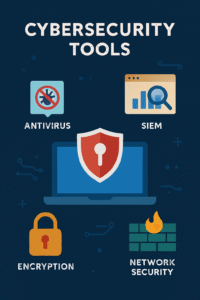
In an increasingly interconnected world, where digital threats evolve at an alarming pace, organizations often find themselves in a challenging predicament. They meticulously invest in a wide array of cybersecurity tools, each designed to address a specific vulnerability or threat vector. Yet, despite significant expenditure and effort, many still feel exposed, grappling with a fragmented defense posture. The promise of robust security often dissolves into a complex tapestry of disparate systems, leading to alert fatigue, operational inefficiencies, and critical blind spots. The real challenge is not merely acquiring tools, but ensuring they form a cohesive, intelligent, and truly integrated cybersecurity stack that works as a unified defense mechanism.
The Cybersecurity Conundrum: Too Many Tools, Too Little Synergy
For years, the conventional wisdom in cybersecurity was to adopt a “best-of-breed” approach, selecting the top-performing solution for each specific security function, be it endpoint protection, firewalls, or identity management. While seemingly logical, this strategy has, inadvertently, led to a pervasive issue: tool sprawl. Research consistently highlights that the average enterprise deploys dozens, sometimes even hundreds, of security products. A study by the Ponemon Institute, for example, revealed that organizations on average use 45 different security tools. This proliferation, rather than fortifying defenses, often introduces complexity.
Imagine a symphony orchestra where each musician plays a different piece, without a conductor or a shared score. That is the reality for many security operations centers (SOCs). Disparate tools generate floods of alerts, often in different formats, lacking context, and requiring manual correlation across multiple dashboards. This “swivel chair” integration, where analysts manually piece together information, is not only inefficient but also highly prone to human error, significantly increasing mean time to detect (MTTD) and mean time to respond (MTTR) to incidents. This leads to a critical paradox: more tools, but less effective security.
Why Integration is No Longer Optional
The evolving threat landscape demands a paradigm shift from siloed solutions to an integrated security architecture. Modern cyberattacks are sophisticated, often multi-vector, chaining together exploits across different layers of an organization’s digital infrastructure. A single point solution, no matter how advanced, cannot effectively detect or mitigate such complex campaigns. Effective defense requires a holistic view, where data from endpoints, networks, applications, and identities is collected, analyzed, and correlated in real-time. Here’s why integration is paramount:
- Enhanced Threat Detection and Response: By correlating data across various security layers, an integrated stack can detect subtle indicators of compromise (IOCs) that individual tools might miss. For instance, an unusual login attempt (identity management) combined with unexpected data egress (network monitoring) and malware activity on an endpoint (EDR) paints a clearer picture of a coordinated attack.
- Operational Efficiency and Reduced Fatigue: A unified platform automates data collection, correlation, and response workflows, significantly reducing the manual burden on security teams. This frees up skilled analysts to focus on true threats and strategic initiatives, rather than sifting through endless false positives.
- Improved Compliance and Reporting: Regulatory frameworks like GDPR, HIPAA, and CCPA demand comprehensive visibility and auditable security practices. An integrated stack provides a centralized repository of security events and actions, simplifying compliance reporting and demonstrating due diligence.
- Elimination of Security Gaps: Point solutions often leave gaps at their interfaces. A unified platform is designed from the ground up to eliminate these seams, ensuring continuous coverage across the attack surface.
Understanding Your Current Environment
Before embarking on the journey of building an integrated stack, organizations must first gain a clear understanding of their existing security posture. This involves a meticulous inventory of all digital assets, including hardware, software, cloud instances, and user identities. Simultaneously, it requires mapping out every existing security tool, its capabilities, its data outputs, and its current level of integration (or lack thereof) with other systems. This critical step helps identify areas of overlap, where multiple tools might perform similar functions, and, more importantly, highlight critical gaps in coverage that need to be addressed by new or integrated solutions.
Core Components of an Integrated Cybersecurity Stack
An effective, integrated cybersecurity stack is built upon foundational layers that communicate seamlessly. While specific tools may vary, the core functions remain constant. Here’s an overview of essential components:
| Component Category | Key Functions | Integration Benefits |
| Attack Surface Management (ASM) | Discovering and mapping all internet-facing assets, identifying exposed services, misconfigurations, and vulnerabilities. | Provides continuous external visibility, informing vulnerability prioritization and feeding into threat intelligence. |
| Vulnerability Management (VM) | Scanning and assessing internal systems for vulnerabilities, patching, and configuration weaknesses. | Complements ASM with internal insights, allowing for a prioritized, risk-based approach to remediation. |
| Identity and Access Management (IAM) | Managing user identities, authentication (MFA), authorization, and privileged access. | Central to ‘zero trust’ principles, detecting anomalous login behavior, and integrating with SIEM for rapid response. |
| Endpoint Detection and Response (EDR) | Monitoring endpoint activity for suspicious behavior, detecting threats, and enabling rapid containment and remediation. | Rich telemetry provides detailed context for alerts, enabling rapid incident response when integrated with SIEM/SOAR. |
| Security Information and Event Management (SIEM) / Security Orchestration, Automation, and Response (SOAR) | Aggregating logs and events from all security tools, correlating data, providing centralized alerting, and automating response workflows. | The central nervous system, enabling unified visibility, automated threat hunting, and rapid, orchestrated incident response. |
| Dark Web Intelligence & Threat Intelligence | Monitoring dark web forums for compromised credentials, leaked data, and emerging threats, curating actionable threat intelligence. | Proactive threat identification, informs risk assessment, enhances detection rules, and provides early warning for potential attacks. |
Strategies for Building a Cohesive Stack
Prioritize Platform-Centric Approaches
Rather than acquiring an array of disparate point solutions, organizations should increasingly look towards unified security platforms. These platforms are designed with integration as a core principle, offering a suite of capabilities that work together out-of-the-box. This approach drastically reduces integration complexity, streamlines management, and provides a singular, correlated view of the security landscape. A unified platform ensures that data flows seamlessly between modules, fostering proactive threat detection and automated response. The benefits extend beyond technology, simplifying vendor management and often yielding significant cost efficiencies.
Data Flow and Correlation
At the heart of any effective integrated stack is the seamless flow and intelligent correlation of data. Every security tool generates valuable telemetry, but its true power is unleashed when this data is centralized and analyzed collectively. A robust SIEM system acts as the aggregator, ingesting logs and alerts from all connected components. When combined with SOAR capabilities, this becomes a powerful engine for automating incident response workflows. For instance, a suspicious email detected by an email security gateway can trigger an automated check for associated user logins via IAM, an endpoint scan via EDR, and a firewall rule update, all orchestrated from a central console. This rapid, automated response is crucial for minimizing damage in a breach scenario.
Automation and Orchestration
The human element, while indispensable for strategic decision-making, can be a bottleneck in incident response. Automating routine tasks and orchestrating complex response workflows dramatically improves efficiency and reduces mean time to remediation. This can involve anything from automated patching based on vulnerability scan results, to quarantining compromised endpoints, or blocking malicious IP addresses. By embedding automation into the integrated stack, organizations can achieve a speed and scale of response that is simply impossible with manual processes alone.
Continuous Monitoring and Adaptation
Cybersecurity is not a “set it and forget it” endeavor. The threat landscape is dynamic, and an effective cybersecurity stack must be equally adaptive. Continuous attack surface monitoring, regular vulnerability scanning, and dark web intelligence provide ongoing insights into an organization’s evolving risk posture. This continuous feedback loop ensures that the integrated stack remains relevant and effective against emerging threats. Periodic security assessments, penetration testing, and red teaming exercises further validate the stack’s efficacy, helping identify and close any remaining security gaps.
Frequently Asked Questions
Q1: What is “tool sprawl” in cybersecurity?
Tool sprawl refers to the situation where organizations deploy a large number of disparate security tools, often leading to increased complexity, operational inefficiencies, alert fatigue, and critical blind spots rather than improved security. This often results from a “best-of-breed” acquisition strategy without sufficient integration planning.
Q2: Why is integrating security tools important?
Integration is crucial because modern cyberattacks are complex and multi-vector. Siloed tools cannot provide a holistic view or detect sophisticated threats effectively. An integrated stack allows for real-time data correlation across different layers (endpoints, networks, identities), enhancing threat detection, improving operational efficiency, ensuring compliance, and eliminating security gaps.
Q3: What are the core components of an integrated cybersecurity stack?
While specific tools vary, essential components typically include Attack Surface Management (ASM), Vulnerability Management (VM), Identity and Access Management (IAM), Endpoint Detection and Response (EDR), and a Security Information and Event Management (SIEM) system, often combined with Security Orchestration, Automation, and Response (SOAR) capabilities. Dark Web Intelligence and Threat Intelligence also play a vital role.
Q4: How does automation and orchestration benefit an integrated security stack?
Automation and orchestration streamline security operations by automating routine tasks and complex incident response workflows. This reduces the manual burden on security teams, minimizes human error, and significantly decreases the mean time to detect and respond to incidents, allowing for a much faster and more scalable defense against threats.
Q5: Can small businesses also benefit from an integrated security approach, or is it just for large enterprises?
Absolutely. While large enterprises might face greater complexity due to scale, small and medium-sized businesses (SMBs) are equally vulnerable to cyberattacks and can benefit immensely. An integrated approach simplifies management, reduces the need for extensive in-house security expertise, and provides comprehensive protection that is often more cost-effective than managing multiple individual solutions. Platforms like AMSEC are designed to cater to organizations of all sizes, including MSPs and MSSPs supporting SMBs.
Q6: What is the first step an organization should take to build a cohesive cybersecurity stack?
The crucial first step is to gain a clear understanding of your current environment. This involves conducting a meticulous inventory of all digital assets (hardware, software, cloud instances, user identities) and mapping out every existing security tool. Identify their capabilities, data outputs, and current integration levels to pinpoint overlaps, gaps, and areas for improvement before considering new solutions or integrations.
The AMSEC Advantage: A Unified Approach to Cyber Defense
At AMSEC, we understand the complexities of building a cybersecurity stack that truly works together. Formed through the merger of RedRok and AMSYS, bringing decades of experience in IT infrastructure and cutting-edge security, AMSEC was purpose-built to address the challenge of disparate security tools. Our AI-powered cybersecurity platform simplifies and strengthens cyber defense for organizations of all sizes, from enterprises to MSPs and MSSPs. We combine continuous attack surface monitoring, internal vulnerability scanning, dark web intelligence, identity management, and real-time threat response into a single, unified platform.
This integrated approach offers a panoramic view of your security posture, eliminating the blind spots and operational inefficiencies inherent in fragmented systems. Our platform is designed for clarity, speed, and precision, delivering actionable insights rather than overwhelming alerts. By leveraging AMSEC’s unified platform, organizations can move beyond merely assembling security tools and instead embrace a truly synergistic cyber defense strategy that provides comprehensive cybersecurity solutions in houston and beyond, ensuring a resilient and adaptive security posture in a rapidly evolving threat landscape.
Conclusion: Beyond Tools, Towards a Unified Strategy
Building a cybersecurity stack that actually works together is no longer a luxury, it is a strategic imperative. The era of piecemeal security solutions has given way to the urgent need for comprehensive, integrated platforms that provide a holistic view of an organization’s risk. By prioritizing synergy over mere accumulation of tools, focusing on seamless data flow and correlation, embracing automation, and committing to continuous monitoring, organizations can transform their cyber defense from a collection of isolated components into a powerful, unified, and resilient shield. The goal is to move beyond simply having security tools to having a truly intelligent and actionable security posture.