

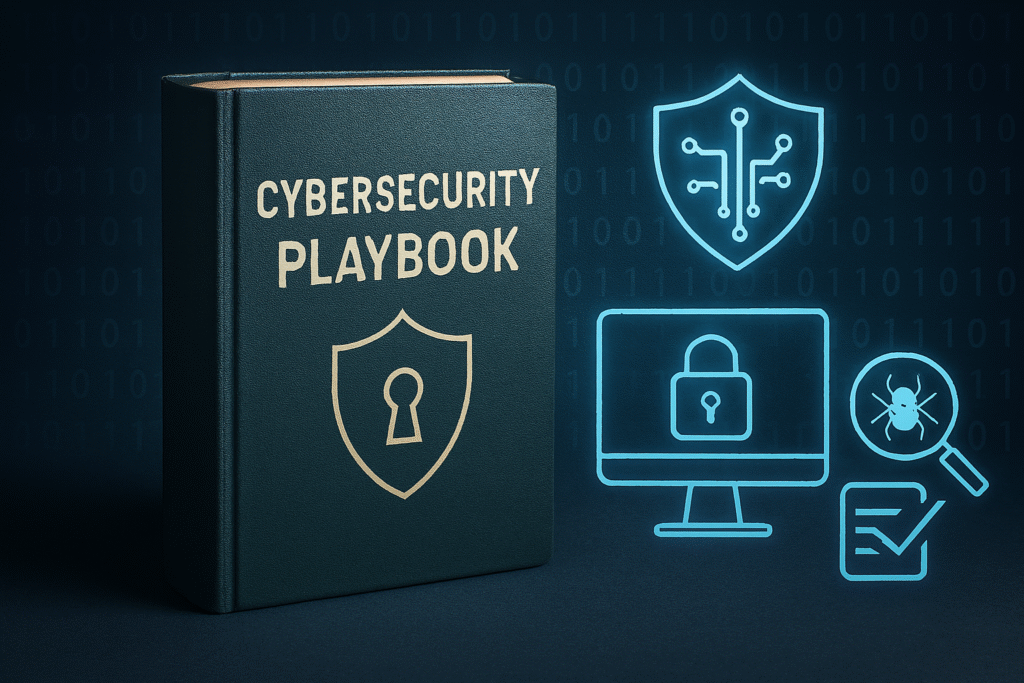
Imagine sitting down for a cup of coffee with a friend, the kind who’s always a step ahead, especially when it comes to keeping digital assets safe. We’re talking about the ever-present, ever-evolving challenge of cybersecurity. As we look towards 2026, the conversation around cyber defense isn’t just about the latest tech; it’s profoundly about preparation. This is where cybersecurity playbooks enter the spotlight, not as dusty binders on a shelf, but as living, breathing strategies crucial for every security team.
The digital landscape is a relentless, dynamic battlefield. Threats morph with startling speed, from sophisticated ransomware gangs leveraging AI, to nation-state actors probing for critical infrastructure vulnerabilities, and even insider threats inadvertently opening backdoors.
For organizations of all sizes, navigating this complexity without a clear roadmap is akin to sailing into a storm without a compass. That roadmap, my friend, is your cybersecurity playbook.
What Exactly is a Cybersecurity Playbook? More Than a Checklist
Forget the old notion of a static, generic incident response plan. A modern cybersecurity playbook is a meticulously documented set of procedures, guidelines, and actions designed to address specific security scenarios. It’s a comprehensive framework that dictates how your team identifies, responds to, and recovers from cyber incidents, manages vulnerabilities, controls access, and even hunts for threats before they fully materialize. Think of it as your organization’s battle plan, refined through experience and anticipation, ensuring clarity and coordinated action under pressure.
For too long, security teams have operated reactively, scrambling to put out fires as they ignite. This approach is not only stressful and inefficient but also profoundly dangerous in an environment where seconds can mean the difference between a contained incident and a catastrophic breach. A well-crafted playbook shifts the paradigm from reaction to proactive resilience, providing a structured approach that empowers teams to act decisively, consistently, and effectively.
Why 2026 Demands Advanced Playbooks: The Evolving Threat Landscape
The push for sophisticated playbooks isn’t merely an academic exercise; it’s a direct response to the escalating threats we anticipate for 2026. Here’s why your current strategies might need a serious upgrade:
The AI-Powered Adversary
Artificial intelligence isn’t just for defense anymore. Threat actors are increasingly harnessing AI to automate attacks, craft more convincing phishing campaigns, bypass traditional defenses, and identify vulnerabilities at scale. This means your response must be equally intelligent and swift. Manual processes simply cannot keep pace with AI-driven attacks.
Expanding Attack Surfaces
Cloud migrations, hybrid work models, the Internet of Things (IoT), and sprawling digital supply chains have shattered the traditional network perimeter. Every new device, every new application, every new third-party vendor introduces potential entry points. Monitoring and securing this vast, interconnected ecosystem requires more than just tools; it demands a systematic, playbook-driven approach to continuous attack surface management.
Talent Gap and Burnout
The cybersecurity industry continues to face a significant talent shortage. Existing teams are stretched thin, often battling alert fatigue and overwhelming workloads. Playbooks, particularly those integrated with automation, serve as force multipliers, enabling smaller teams to manage larger responsibilities by standardizing responses and reducing the need for constant, manual intervention.
Regulatory and Compliance Pressure
Data privacy regulations are becoming stricter and more widespread globally. Organizations face immense pressure to demonstrate robust security postures and provide clear evidence of their incident response capabilities. Well-documented playbooks are indispensable for proving due diligence and maintaining compliance, minimizing legal and financial repercussions in the event of a breach.
The Anatomy of a Robust Cybersecurity Playbook
While the specifics vary, effective playbooks share core components. They are not one-size-fits-all documents but rather a collection of specialized guides:
Incident Response (IR) Playbooks
These are the backbone of any security operation. From ransomware attacks to data breaches, IR playbooks dictate every step: detection, containment, eradication, recovery, and post-incident analysis. They define roles, communication protocols, and escalation paths, ensuring everyone knows their part when chaos threatens.
Vulnerability Management Playbooks
Proactive security hinges on identifying and remediating weaknesses before they are exploited. These playbooks detail procedures for continuous vulnerability scanning, prioritization based on risk and exploitability, patch management, and verification. They ensure a systematic approach to reducing your attack surface.
Identity and Access Management (IAM) Playbooks
Controlling who has access to what, and under what conditions, is fundamental. IAM playbooks cover user provisioning/deprovisioning, multi-factor authentication (MFA) enforcement, privileged access management, and regular access reviews. They are critical in preventing unauthorized access and mitigating insider threats.
Threat Intelligence & Hunting Playbooks
Moving beyond reactive defense, these playbooks guide security teams in actively searching for threats lurking within their networks. They leverage dark web intelligence, Indicators of Compromise (IoCs), and MITRE ATT&CK framework tactics to proactively identify and neutralize adversaries before they achieve their objectives.
To give you a clearer picture, here’s a quick overview of some essential playbook types and their primary objectives:
| Playbook Type | Primary Objective | Key Scenarios Covered |
|---|---|---|
| Incident Response (IR) | Contain, eradicate, and recover from cyberattacks | Phishing, Malware, Ransomware, Data Breach, DDoS |
| Vulnerability Management | Identify, prioritize, and remediate security flaws | New CVEs, Misconfigurations, Outdated Software, Network Weaknesses |
| Identity & Access Management | Control user access and prevent unauthorized entry | Account Takeover, Privilege Escalation, Insider Threat, MFA Bypass |
| Threat Intelligence & Hunting | Proactively detect and neutralize emerging threats | APT Activity, Zero-day Exploits, Dark Web Mentions, Lateral Movement |
Integrating AI and Automation into Your Playbooks
Simply having a playbook isn’t enough; it must be actionable and efficient. This is where automation and AI become invaluable. Imagine an incident where a phishing attempt is detected. Instead of manual triage, an automated playbook can instantly isolate the affected endpoint, revoke access to malicious links, notify relevant personnel, and even kick off a forensic collection process. This speed is non-negotiable in the face of today’s rapid-fire attacks.
AMSEC, for instance, embodies this philosophy. Our platform integrates continuous attack surface monitoring with internal vulnerability scanning, dark web intelligence, and identity management. This unified approach provides the real-time data feeds and contextual insights that turn a static playbook into a dynamic, automated defense mechanism. When an alert fires, the system provides not just the “what,” but also the “how” through predefined, automated responses, greatly accelerating your team’s ability to act.
Beyond the Pages: The Human Element
Even the most perfectly written playbook is only as good as the team executing it. Regular training, tabletop exercises, and simulated attack drills are paramount. These sessions help teams internalize procedures, identify gaps in playbooks, and build the muscle memory needed to perform under pressure. It’s about fostering a culture of readiness, where every team member feels confident and capable, not just when things are calm, but especially when the alarm bells are ringing. Moreover, gaining feedback from these drills helps in continuously refining and improving your playbooks.
Remember, a playbook isn’t etched in stone. The threat landscape changes, technology evolves, and your organization’s needs shift. Regular reviews and updates are vital. Treat your playbooks as living documents, constantly adapting to new threats, lessons learned, and technological advancements.
Frequently Asked Questions (FAQ)
What is the core difference between a traditional incident response plan and a modern cybersecurity playbook?
While an incident response plan is a component of a playbook, a modern cybersecurity playbook is much broader. It encompasses not only incident response but also proactive measures like vulnerability management, identity and access control, and threat hunting. It’s a comprehensive framework for various security scenarios, not just reacting to a breach, and emphasizes integration with automation and continuous improvement.
How frequently should an organization update its cybersecurity playbooks?
Cybersecurity playbooks should be treated as living documents, requiring regular review and updates. Ideally, they should be reviewed at least quarterly, or immediately after any significant security incident, a change in organizational infrastructure, the introduction of new technologies, or an update to regulatory requirements. The evolving threat landscape necessitates constant adaptation.
Are cybersecurity playbooks only for large enterprises, or can small and medium-sized businesses (SMBs) benefit too?
Cybersecurity playbooks are crucial for organizations of all sizes. While the complexity and scale might differ, SMBs face many of the same threats as larger entities. A well-defined playbook helps SMBs standardize their security operations, optimize limited resources, and ensure a consistent, effective response to incidents, significantly improving their resilience against cyberattacks.
How does AI enhance the effectiveness of cybersecurity playbooks?
AI can significantly enhance playbooks by automating detection, response, and even predictive analysis. AI-powered tools can rapidly identify anomalies, prioritize threats, and execute pre-defined actions like endpoint isolation or access revocation, far faster than manual processes. This allows teams to shift from reactive firefighting to proactive, intelligent defense, making playbooks more dynamic and efficient.
What is the first step an organization should take to develop a robust cybersecurity playbook?
The first step is typically a thorough assessment of your current security posture, existing threats, and critical assets. This includes identifying your organization’s unique risks, understanding its specific compliance requirements, and defining clear objectives for what the playbooks need to achieve. Starting with a clear understanding of your environment will inform the development of relevant and effective procedures.
AMSEC’s Role in Empowering Your Playbooks
For enterprises, MSPs, and MSSPs wrestling with the sheer volume of security challenges, the AMSEC platform is designed to provide clarity, speed, and precision. We help bridge the gap between complex cybersecurity challenges and accessible, actionable solutions. By centralizing continuous monitoring, internal scanning, dark web intelligence, identity management, and real-time threat response, AMSEC provides the intelligence and automation necessary to make your cybersecurity playbooks not just theoretical guides, but practical, effective tools for cyber defense. This allows your team to focus on strategic insights and proactive measures, rather than getting bogged down in manual, repetitive tasks. We believe that a strong defense is an intelligent, unified one.
Conclusion: The Indispensable Tool for 2026
As we navigate towards 2026, cybersecurity playbooks will no longer be optional extras; they will be non-negotiable necessities. They are your organization’s blueprint for survival and resilience in an increasingly hostile digital world. Investing time and resources into developing, maintaining, and automating these playbooks is one of the most impactful decisions a security leader can make. It’s about empowering your team, strengthening your defenses, and ensuring your organization can weather any digital storm. Your future security posture depends on it. Partner with a forward-thinking cybersecurity company to elevate your cyber defense strategy.