

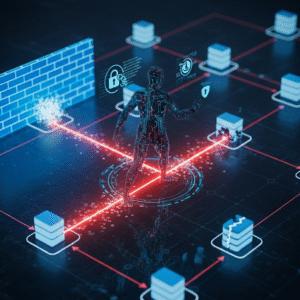
 Imagine this unsettling scenario: An attacker has breached your perimeter. They’ve slipped past your initial defenses, maybe through a cleverly crafted phishing email or an unpatched vulnerability. You might think, “Okay, they’re in the front lobby, but we’ll catch them there.” The truly terrifying part is when they don’t just stay in the lobby. They begin to move, silently, purposefully, through your internal network, seeking out the crown jewels of your organization. This is lateral movement, and it’s arguably the most critical phase of a sophisticated cyberattack.
For too long, our industry has focused heavily on preventing the initial breach. And while that’s undeniably crucial, the reality is that determined adversaries often find a way in. Once inside, their ability to traverse your network undetected dramatically increases the potential damage. It’s like a burglar who, after picking the front door lock, then meticulously explores every room, looking for valuables, rather than just grabbing what’s near the entrance. As a leading cybersecurity company, AMSEC understands that effective cyber defense means not only building formidable walls but also having an ironclad internal security system.
What is Lateral Movement, Really?
At its core, lateral movement refers to the techniques threat actors employ to navigate from one compromised system to another within a network. Their goal is usually privilege escalation or gaining access to high-value assets. They might start with a low-privilege workstation, then hop to a server, then a domain controller, slowly expanding their footprint and elevating their permissions until they can achieve their ultimate objective, whether that’s data exfiltration, system destruction, or holding your operations for ransom.
It’s a strategic dance, executed with stealth and precision. Unlike external attacks that often trigger loud alarms, lateral movement often mimics legitimate user behavior. Think about it: an administrator remotely accessing a server, a developer connecting to a different development machine, or an employee accessing shared files. These are everyday activities that, when weaponized by an attacker, become incredibly difficult to distinguish from genuine operations without the right tools and vigilance.
Why is it the Adversary’s Best Friend?
The moment an attacker achieves initial access, they’re typically within a constrained environment. To reach their target, they need to expand their access. Lateral movement allows them to do several things:
- Discover valuable assets: They map out your network, identifying critical servers, databases, and sensitive data repositories.
- Escalate privileges: They hunt for credentials, vulnerabilities, or misconfigurations that will grant them higher access levels, moving from a regular user to an administrator or domain admin.
- Establish persistence: They can create backdoors, deploy malware, or modify configurations on multiple systems, making it harder to evict them once detected.
- Evade detection: By moving between systems and using legitimate tools, they blend into the network traffic, making their malicious activities less conspicuous.
This is where the real danger lies. If they can move around freely, they can spend weeks or months inside your network, carefully planning their final move, potentially leading to catastrophic breaches that often go unnoticed until it’s far too late.
Common Techniques Used for Lateral Movement
Attackers aren’t reinventing the wheel with every intrusion; they often leverage well-known protocols and functionalities. Understanding these is the first step toward effective detection. By recognizing these patterns, organizations can better prepare their defenses and identify suspicious activities more rapidly.
| Technique | Description | Primary Detection Indicator |
| Remote Desktop Protocol (RDP) | Using legitimate RDP sessions to connect to other machines after credential compromise. | Unusual RDP source IPs, timing, or account usage. |
| PsExec / Windows Management Instrumentation (WMI) | Executing commands remotely on other systems using administrative tools. | Unusual process creation, service installations, or WMI activity from unexpected sources. |
| Pass-the-Hash (PtH) / Pass-the-Ticket (PtT) | Reusing stolen credential hashes or Kerberos tickets to authenticate to other systems without knowing the plaintext password. | Authentication attempts using hashes or tickets where full password authentication is expected, unusual Kerberos activity. |
| Remote Services (SMB, SSH) | Connecting to shared folders, deploying malicious services, or establishing SSH connections on target systems. | Anomalous SMB/SSH sessions, file transfers, or service creations from suspicious endpoints. |
| PowerShell / Living-off-the-Land Binaries (LOLBins) | Using built-in system tools (like PowerShell, rundll32, certutil) for reconnaissance, command execution, and data exfiltration, making it harder to flag as malicious. | Suspicious PowerShell command chains, unusual process parent-child relationships, or execution of LOLBins in non-standard ways. |
Detecting the Ghost in the Machine: Key Indicators
Catching these stealthy movements requires more than just perimeter defenses; it demands deep visibility into your internal network. You need to be able to spot the anomalies, the tiny deviations from the norm that signal something is terribly wrong. It’s about looking for the subtle whispers, not just the loud shouts.
Anomalous Authentication and Access Patterns
A classic sign of lateral movement involves credential abuse, which is often a primary target for adversaries. Gaining access to legitimate credentials allows them to move freely and blend in, making detection more challenging. This could manifest as:
- Logins from unusual source IP addresses or machines for a particular user account.
- Successful logins outside of normal working hours or geographical regions for an employee.
- Repeated failed login attempts followed by a sudden success from a new source.
- A service account suddenly logging into an interactive desktop, or a user account accessing a server it typically has no business with.
These are the digital breadcrumbs attackers leave behind, if you only know how to look. Proactive monitoring and analysis of these authentication patterns are crucial for early detection. Ignoring these subtle indicators can allow an attacker to establish a deep and persistent foothold.
Unusual Process Execution and Activity
Attackers often drop tools or execute commands to move laterally, exploiting system utilities and misconfigurations. Vigilant monitoring of process execution is therefore essential to catch these stealthy activities. Keep an eye out for:
- The execution of remote administration tools (like PsExec, WMIExec) on endpoints where they shouldn’t be used, or from unexpected source machines.
- New services being created or modified on internal systems without authorization.
- Unexpected execution of PowerShell scripts or other scripting languages that interact with network resources.
- Processes running with elevated privileges that are unusual for that system or user.
Network Traffic Anomalies
While an attacker tries to blend in, their activities might still generate unusual network traffic, providing vital clues to their presence. These network anomalies can be critical indicators of compromise that deviate from expected baselines. Therefore, diligent monitoring of network flow and communication patterns is essential, and you should keep an eye out for:
- Spikes in internal network traffic that don’t correspond to legitimate business operations.
- Connections to unusual ports or protocols between internal systems.
- Internal scanning activities, where an attacker is trying to map out your network.
- Lateral data transfers, especially large volumes of data moving between internal systems or to a suspicious external staging server.
Responding When You Find the Intrusions
Detecting lateral movement is a significant victory, but it’s only half the battle. A swift, decisive response is paramount to minimize damage and eradicate the threat.
1. Containment
The moment you detect an attacker moving laterally, your immediate priority is to stop their spread. This might involve isolating compromised systems, blocking suspicious IP addresses internally, or temporarily disabling compromised user accounts. The goal here is to put a digital fence around the active threat, preventing them from accessing more of your network.
2. Eradication
Once contained, you need to systematically remove the attacker’s presence. This includes cleaning malware, patching exploited vulnerabilities, resetting all compromised credentials (and any related accounts that might be vulnerable), and removing any backdoors or persistence mechanisms they’ve established. This phase often requires thorough forensic analysis to ensure no stone is left unturned.
3. Recovery
After eradication, restore affected systems and services to normal operation. This might involve restoring from clean backups, reconfiguring security settings, and verifying that all systems are secure before bringing them back online. Communication is key here, both internally and potentially with external stakeholders if sensitive data was involved.
4. Lessons Learned
The incident isn’t truly over until you’ve conducted a post-mortem analysis. What allowed the attacker in? How did they move laterally? What detection mechanisms failed, and which ones worked? Use these insights to strengthen your defenses, update your playbooks, and improve your overall security posture. This continuous improvement loop is what separates resilient organizations from those doomed to repeat history.
AMSEC: Your Watchtower Against Internal Threats
The sheer volume and complexity of internal network activity can make detecting lateral movement feel like finding a needle in a haystack. This is precisely where AMSEC’s unified platform shines. Born from the merger of RedRok and AMSYS, bringing decades of experience, our AI-powered solution simplifies and strengthens your cyber defense.
We combine continuous attack surface monitoring with internal vulnerability scanning, giving you an unparalleled view of your network’s security posture. Our platform doesn’t just look for known signatures; it employs sophisticated behavioral analytics to identify deviations from normal activity, those subtle indicators of lateral movement we discussed. By correlating alerts from identity management systems with real-time threat responses, we empower enterprises, MSPs, and MSSPs to gain clarity, speed, and precision in their defense. Our platform acts as your vigilant watchtower, automatically flagging suspicious activities and providing the actionable intelligence you need to respond before a small foothold becomes a full-blown crisis.
Frequently Asked Questions About Lateral Movement
Q1: What is the primary goal of lateral movement for an attacker?
The primary goal of lateral movement is to expand an attacker’s access within a compromised network, usually to achieve privilege escalation, gain access to high-value assets (like sensitive data servers or domain controllers), and establish persistence. It allows them to move from an initial, often limited, point of entry to their ultimate target, often remaining undetected for extended periods.
Q2: How does lateral movement differ from the initial breach?
The initial breach (or “initial access”) is when an attacker first gains entry into a network, typically through phishing, exploiting vulnerabilities, or using stolen credentials. Lateral movement, on the other hand, occurs *after* the initial breach, referring to the techniques used to navigate *within* the network from one compromised system to another. The initial breach gets them “in the door”; lateral movement allows them to explore the “house.”
Q3: Why is detecting lateral movement so challenging?
Detecting lateral movement is challenging because attackers often “live off the land,” meaning they use legitimate system tools, protocols (like RDP, SMB, WMI), and stolen credentials. This makes their activity look like normal user or administrative behavior, blending in with regular network traffic. Without deep visibility, behavioral analytics, and continuous monitoring, these subtle anomalies are easily missed.
Q4: What are the most common techniques attackers use for lateral movement?
Common techniques include abusing Remote Desktop Protocol (RDP), executing commands remotely via tools like PsExec or Windows Management Instrumentation (WMI), using credential theft techniques such as Pass-the-Hash or Pass-the-Ticket, and leveraging legitimate remote services like SMB or SSH. Attackers also frequently use built-in scripting languages and binaries (LOLBins) like PowerShell to remain stealthy.
Q5: How can AMSEC help organizations defend against lateral movement?
AMSEC’s unified platform combines continuous attack surface monitoring with internal vulnerability scanning and AI-powered behavioral analytics. Our solution goes beyond signature-based detection to identify subtle deviations from normal activity, which are telltale signs of lateral movement. By correlating alerts from identity management and providing real-time threat responses, AMSEC helps organizations gain the clarity and speed needed to detect and mitigate internal threats effectively.
Conclusion
Lateral movement is no longer an advanced tactic reserved for nation-state actors; it’s a standard play in every sophisticated attacker’s playbook. Accepting that initial breaches can and do happen is the first step towards a more robust security strategy. The real battle often begins once an adversary is inside, making the ability to detect and respond to their internal movements absolutely critical. By focusing on deep visibility, behavioral analytics, and a rapid, well-orchestrated incident response plan, organizations can turn the tables on attackers. It’s about being proactive, understanding the adversary’s methods, and having the right tools in place to protect your most valuable assets, transforming your internal network from a sprawling playground for attackers into a securely monitored and defended fortress.